


If your favourite Chase Tag® team disappeared tomorrow, would it change anything?
Would viewership drop? Would ticket sales suffer? Would fans be devastated? Or would everyone just move on to the next event, watch whoever’s playing, and forget your team ever existed?
For almost every team in the sport right now, the answer is brutal: nobody would notice.
What Breaking Crews Understood
Before we talk about what’s broken, let’s talk about what works.
The earliest proponents of breaking were Black and Puerto Rican youths who formed crews to compete in dance battles on the streets. Groups like Rock Steady Crew were more than teams. They were communities with geographic roots, cultural identity, and stories that mattered to people.
Seine-Saint-Denis is still considered the heart of France’s hip-hop scene decades after breaking first arrived there. Why? Because the crews that formed there weren’t built around competition results. They were built around belonging. Shared style. Shared place. Shared culture. The battles came later.
Identity before competition. That’s the difference.
Most sports teams try to build identity through competition. Win enough, and fans will come. It doesn’t work. Breaking crews proved that belonging comes first. Results matter only after people already care.
A Team With Stories Beats a Team With Trophies
Here’s the core argument: a team that fans care about will always be more valuable to the sport than a team that wins events but leaves no impression.
When we tell the story of Chase Tag® in ten years, what will matter? The team that won a title with athletes nobody connected with, then quietly disappeared? Or the team that built something memorable, created figures fans loved, and left a mark on the culture?
Trophies matter. But if nobody cares or remembers that you won, did it really matter?
Think about the teams you’ve genuinely cared about in any sport. Was it because of their record? Or was it something else: your city, your country, a player you loved, a story that resonated, a feeling of belonging?
The record matters after you already care. It doesn’t make you care in the first place.
Other Emerging Sports Have the Same Problem
Chase Tag® isn’t alone here.
The Premier Lacrosse League found in 2024 that roughly 70% of their fans were fans of the league rather than a single team. Their response: introduce home cities for each franchise, trying to create geographic connection where none existed. Early results suggest it’s working. Their 2024 season opened with the third most-watched game in league history and record merchandise sales.
Pickleball is further behind. On average, only a few thousand people watch pro pickleball live. Major League Pickleball has celebrity owners like LeBron James and Drew Brees, but the sport’s biggest challenge remains growing a loyal fan base. Celebrity money can buy attention. It can’t buy belonging.
The pattern is clear: leagues that own the audience thrive. Teams without identity struggle, regardless of the sport.
The Lifecycle of Chase Tag® Teams
Most teams follow the same arc:
A group of friends trains together. They give themselves a name. They compete for a season or two. Then someone moves, someone loses motivation, the person holding it all together burns out. The team dissolves.
This is the default because these teams were built to compete, not to last. They’re hobbies with logos. The structure doesn’t survive any single member leaving.
What teams actually do: train (sometimes), compete (when they can afford to), post highlights (sporadically).
What almost no team does: build an audience, create content that builds connection, develop a visual identity, think about revenue, plan beyond next season.
What Could Create Connection
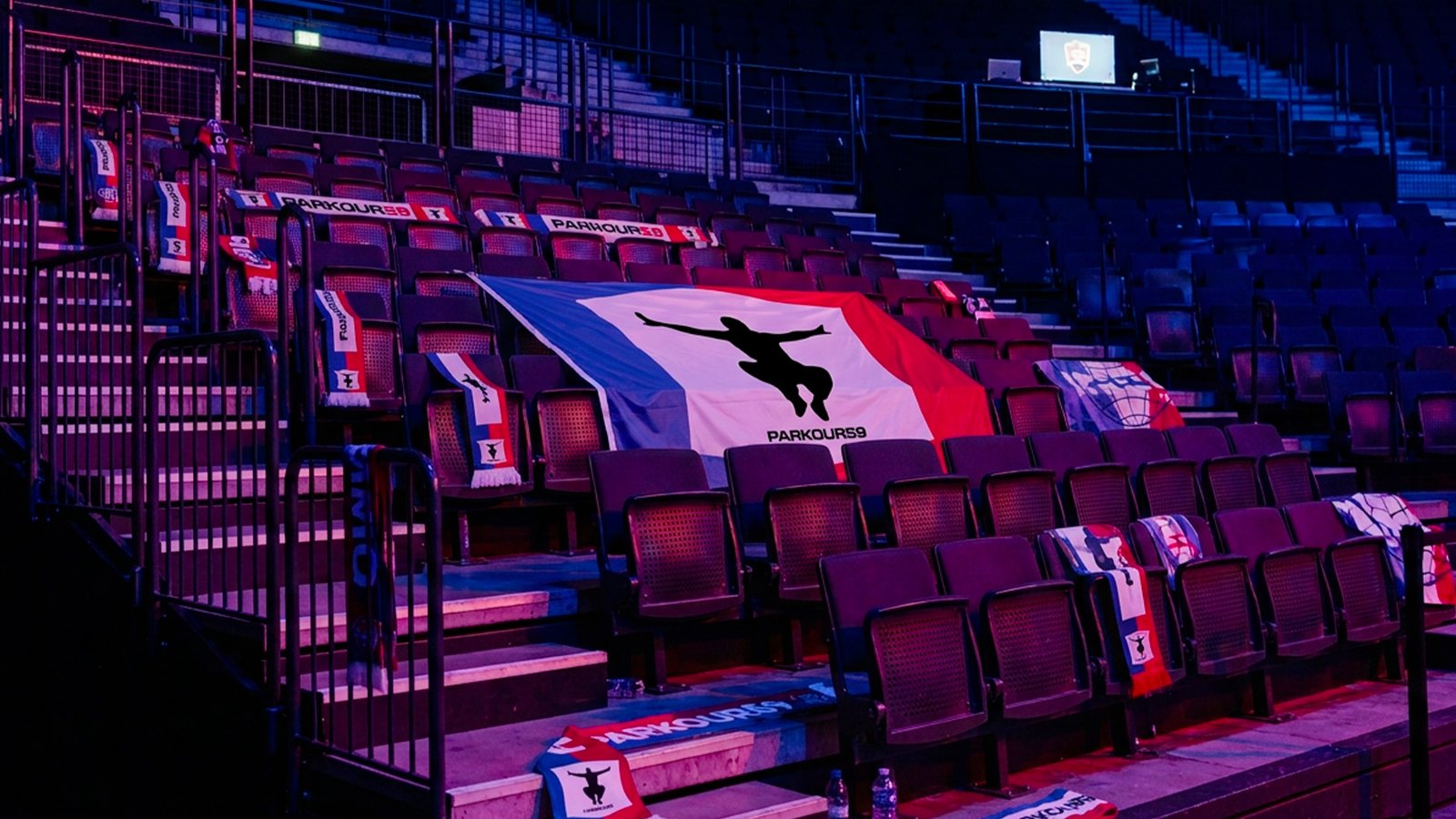
Geographic identity. The oldest method in sports. Parkour59’s jersey redesign to represent France is a textbook example. Rooftop Kings’ Morocco-inspired kit does the same. ParkourMan carries China with four consecutive national titles. Motion Academy is positioning as Spain’s first Quad™. But being « from somewhere » isn’t enough. You have to make people from that place feel ownership. Local presence, local content, local engagement over years. Not just colours on a jersey or a city name in your bio.
A figure who owns the team. Individual athletes have proven you can build a following in this sport but teams haven’t managed the same. And when teams do gain followers, it’s usually from a viral clip that brings thousands of subscribers who will never attend an event, buy merchandise, or support the team in any meaningful way beyond that one click. There’s a clear difference between passive followers and fans. Fans show up. The difference matters.
A story worth following. The underdog. The dynasty. The academy pipeline. A narrative clear enough that fans attach to it. This requires intentional storytelling that simple event recaps or highlights can’t provide. Who are you? What do you stand for? Why does your journey matter?
Community. Something fans feel part of. Discord servers, local training sessions, fan involvement in decisions. This takes more work than posting clips. It also creates more loyalty than anything else.
Some Teams Are Getting Pieces Right
No team has cracked it yet. But some are building foundations worth watching.
Parkour59 changed their jersey from red and white to the colours of France, positioning themselves as the de facto French national team. Smart move: any viewer immediately knows who they are and who to root for. More importantly, they have infrastructure. A club. A Quad™. Employees. Classes. Academy teams developing new talent. Fifteen years of local presence in Roubaix means they already have community. What’s missing: almost no social media content, no clear roadmap to convert all of this into a fanbase that extends beyond their city.
Rooftop Kings have a gym, a Quad™, clear leadership, great transfers, and they run their own events. They’ve built mixed and women’s teams. Their mixed team jersey draws from Morocco’s flag and official sports kits, creating instant recognition. They’re doing a lot right. The question is whether they’re building audience or just building infrastructure.
Hollywood Freerunners have one of the strongest rosters in the sport, consistent performances, a couple of influential athletes, and their own merchandise line. Whether that translates to fans who care about Hollywood specifically (rather than just the athletes on the roster) remains to be seen.
Kunoichi has pursued sponsors and merchandise, and they’re working on infrastructure. The challenge: their athletes are scattered across the world. Building community is harder when there’s no physical centre.
Fakaw is attempting the club model with six teams (one women’s, one professional mixed, four academy) and regular social content. The structure is there. What’s not there yet: a feeling that makes people want to join the family, not just watch from outside.
None of these teams have solved it. But they’re each solving pieces. The team that combines infrastructure, identity, content, and community first will have something nobody else has.
The Business Reality
Most Chase Tag® teams operate at a loss. Prize money is inconsistent. Travel costs are high. Sponsors are rare.
This is fine if everyone treats it as a hobby. It’s unsustainable for anyone trying to do this seriously.
Sponsors want audience. Right now, sponsors who want Chase Tag® exposure go to WCT directly. What does a team offer that the league doesn’t? If the answer is « nothing, » teams will never have meaningful sponsor revenue.
Sustainable teams need: ownership that outlasts individuals, revenue streams beyond prize money, an audience they own (not borrowed from WCT), and a vision that extends beyond next season.
How many Chase Tag® teams have any of this?
Because nobody has built this yet, the opportunity is wide open.
The sport is growing. Events are bigger each year. But no team has claimed a real fanbase. The audience belongs to WCT, not to any individual team.
The first team to figure this out gets a massive advantage at the exact moment the sport breaks through. They’ll attract sponsors looking for partners with actual reach. They’ll sell merchandise people want to buy. They’ll have fans who travel to see them specifically.
Everyone else will keep training, keep competing, keep dissolving, and keep wondering why nobody cared.
Where to Start
If you run a team and you’ve read this far, here’s a concrete first step:
Answer this question publicly, on your socials, this week: Why should anyone support us specifically?
Not « we’re good. » Not « we train hard. » Not « we have talented athletes. »
Why you? What do you offer that creates belonging?
If you can’t answer that, your fans can’t either. And without fans, you don’t have a team. You have a group of friends who compete together until someone gets bored.
That’s fine. Just don’t confuse it with building something.