


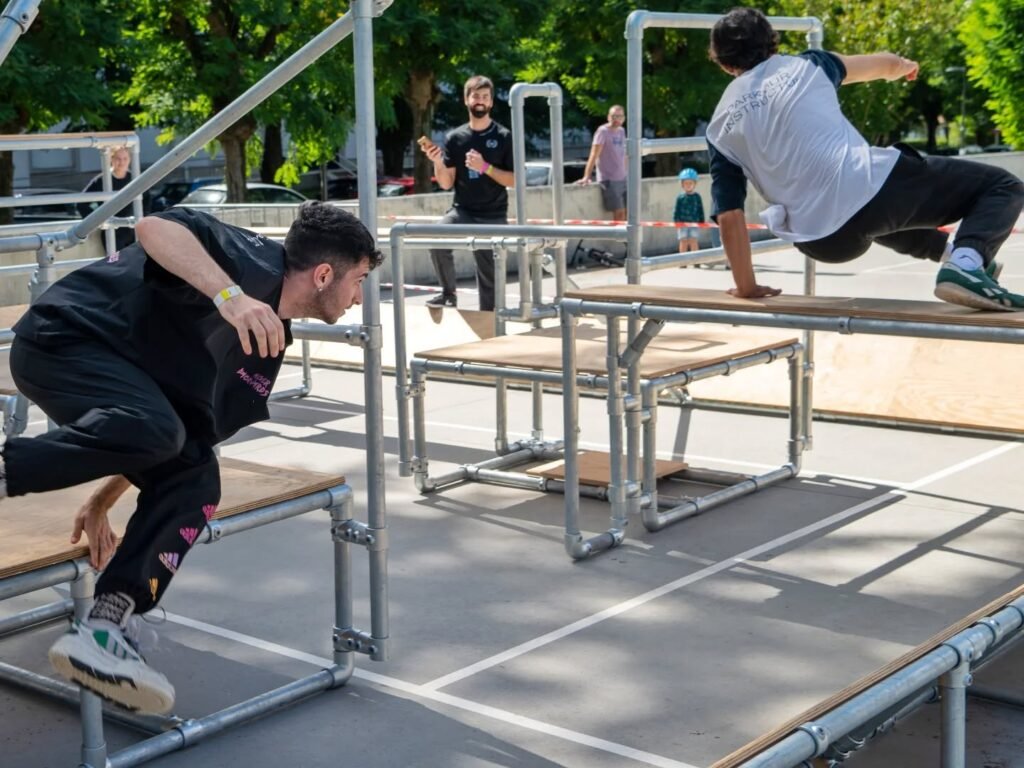
In the middle of a university square in Santiago de Compostela, Julio Portela watched a trailer pull up and unload what looked like a maze of bars and wood. He had no idea what it was. His instincts said parkour.
It was an 8×8 meter Quad™. And it changed everything.
« I understood the concept immediately, » Portela recalls. « But my instincts just wanted to do parkour. Then I discovered the strategy, how you could build a game plan with a cool head without wasting energy. I fell in love with it. »
That moment led to Motion Academy becoming the first gym in Spain to install a World Chase Tag® Quad™. Now, Portela is trying to do something ambitious: build Spanish Chase Tag® from the ground up.

The Cold Mind
Ask Julio what draws him to Chase Tag®, and he doesn’t talk about athleticism first. He talks about the mind.
« It has martial arts components in terms of mental preparation, » he explains. « If you crumble or lose focus, it’s easy to fail at giving your 100% in those 20 seconds. »
He sees parallels to American football. The repetition, the pressure of performing in milliseconds, the reality that you might only get one chance to save a match. But what captivates him most is the tactical layer: reading opponents, identifying patterns, understanding how people move under pressure.
« That mental edge is only forged in the Quad™ against other teams. You can really tell who has the most mileage. »
Building From Zero
When Motion Academy installed the Quad™, they faced an immediate problem: nobody in Galicia knew what World Chase Tag® was.
« People thought it was just a parkour setup, » Portela says. « Even the gym manager didn’t have a clear idea of the sport and initially used it for kids to play basic tag. »
The solution was education. Portela implemented workshops to teach the culture and strategy of the sport. They launched an « Experience » programme, simulated competitions in a guided, confidence-building environment for beginners.
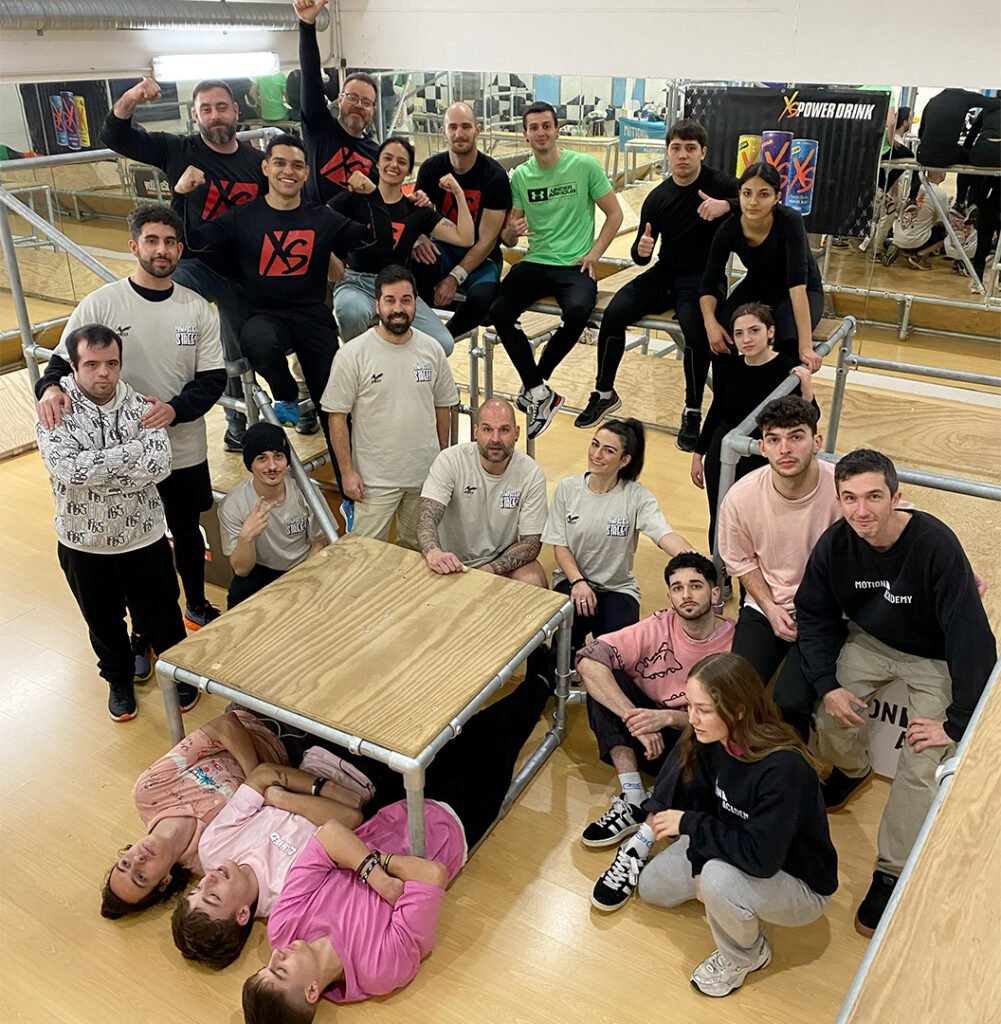
It’s working. 65 people have now trained on the facility. Three kids’ teams. Four adult teams. And crucially: « EVERYONE who comes had no idea this existed, and they love it. »
The challenge now is infrastructure. The gym hasn’t set up a proper booking system, so Portela manages everything through a WhatsApp community. It’s grassroots in the truest sense, growth happening despite the systems, not because of them.

Baptism by Fire: The Spanish Chase-Off™
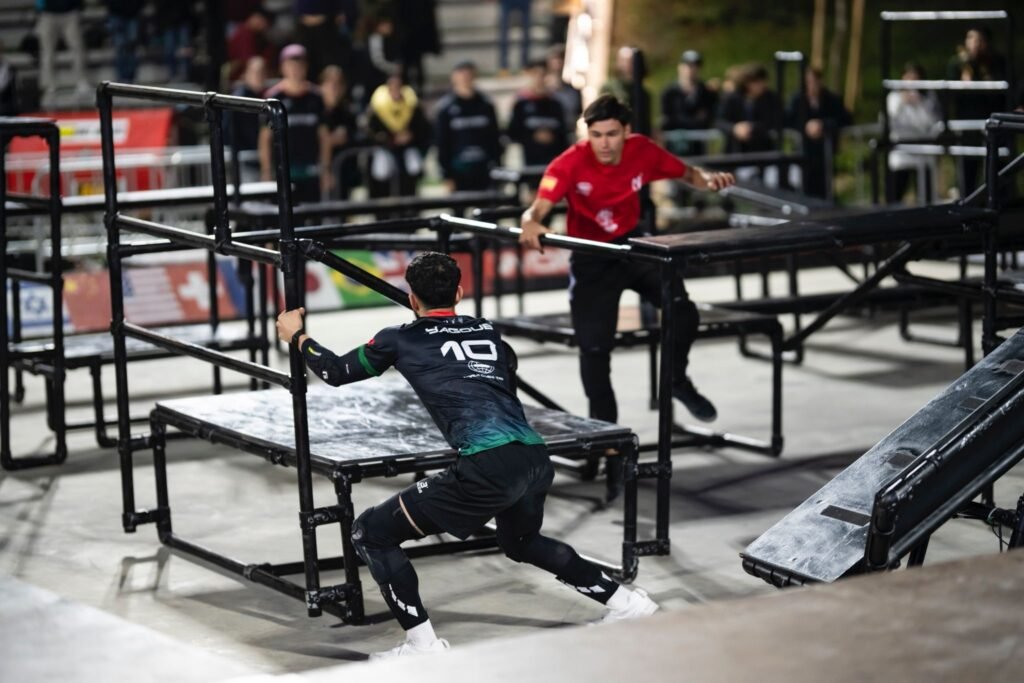
Portela’s competitive debut came at the first Spanish Chase-Off™ in Málaga and it was a reality check.
The event was outdoors, near the sea, and everything was wet due to condensation. Facing experienced international teams like Rooftop Kings and Fakaw Paris (read more about those 2 teams rivalry), the Spanish contingent felt the gap immediately.
« The impact of facing teams with a lot of experience who knew exactly how to play was a bit demoralising at first, » Portela admits. « I realized I wasn’t in perfect physical or mental shape and took a while to get going. »
But there were moments. Against Rooftop Kings’ captain Redouan Yagoub, Portela read him perfectly and got the tag. « He’s an incredible player, much respect to him. That woke me up. »
Against Fakaw Paris, he started to find his rhythm until he slipped on the wet surface. « That was my fault for misreading how damp the floor was. »
The captains voted to continue despite the conditions. The pace was relentless. « If you lose focus for a second, the whole event passes you by. You have to be 100% in the zone. »
His takeaway? « We might need a coach to prepare for that in the future. »
The 2026 Plan
Portela isn’t just building a gym. He’s trying to build an ecosystem.
Motion Academy is currently in talks with the Diputación de A Coruña, the regional government, to create a joint annual calendar supporting Chase Tag’s growth. Workshops and competitions are scheduled through June. Three regional competitions will bring athletes from across Galicia.
The big target: an official competition in September 2026 at the Compostela Street event where Portela first discovered the sport.
« Being the first school in Spain to have WCT and having collaborated with Loïc Ascarino (Head of Licensing at WCT) and Thomas Rodrigues (Lead Developer at Squared & host at Quadside) in Madrid, we want to lead the diffusion of the sport in Spain, » he says. « Maybe build something similar to what France has. »
That’s not a small ambition. France has multiple competitive teams and regular international representation. Spain is starting from one Quad™‚ and a WhatsApp group.
But Portela is already thinking beyond Galicia. Conversations are open with other Spanish regions to move the Quad™ around, giving the sport visibility nationwide.


Can Spain Build a World-Class Team?
The question everyone’s asking: can Spain field a competitive team for WCT8?
« We definitely have the potential, » Portela says. « We are already preparing to assemble one. »
The challenge is depth. Not enough people know the dynamics yet. The February-to-June calendar is designed to grow that talent pool and everyone’s invited.
Together with Vella Escola, Motion Academy aims to create a team that can « hold its own internationally. » More than eight women have already played with strong results, opening the door for a mixed or women’s team.
« It’s just a matter of the time and dedication they want to put in, » Portela says. « But anyway… we are going all in. »
The Gap And How to Close It
After competing against top international teams, Portela has a clear-eyed view of where Spain stands.
« The biggest gap I noticed is the mental state. Physically and skill-wise, I think you can catch up quickly if you train every day. But that mental edge is only forged in the Quad™ against other teams. »
It’s a chicken-and-egg problem. You need competition to develop mental toughness. But you need athletes to create competition. Motion Academy is trying to solve both simultaneously. Building the community while preparing individuals for the intensity of international play.
The three weeks Portela spent at the Madrid event, four hours daily of workshops, seven hours on weekends, completing WCT Level 1 and Level 2 certification, gave him a template for what serious development looks like.
« Studying while taking action made it much easier to assimilate everything, » he says. « That immersion gave me a much deeper understanding of the scale of World Chase Tag®. »

The First Step
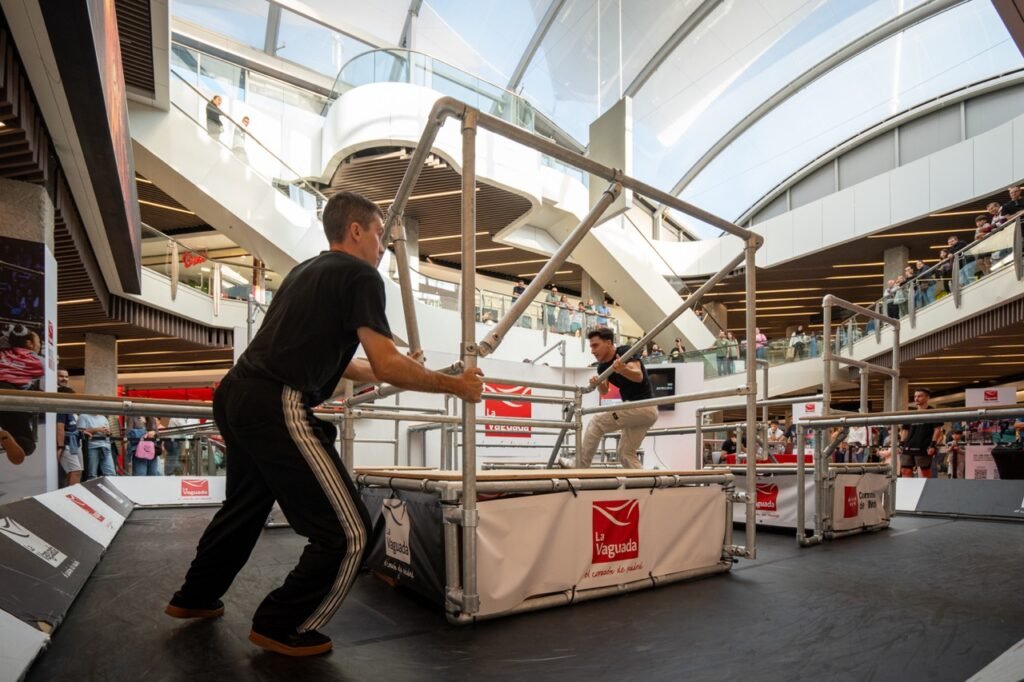
Spain’s Chase Tag® story is just beginning. One Quad™. 65 athletes. A WhatsApp group. Regional government conversations. A dream of competing at Worlds.
It’s not much yet. But every Chase Tag® nation started somewhere.
France started with a few athletes who saw something in the sport. The UK built from playground games to world championships. The US grew from viral videos to dominant teams.
Spain is taking its first steps. And at Motion Academy in Galicia, Julio Portela is making sure those steps lead somewhere.
« We are the first school in Spain to have World Chase Tag®, » he says. « We want to be part of building something big. »
The Quad™ is installed. The community is growing. The plan is in motion.
Now it’s just a matter of time and dedication.
Vamos con todo.