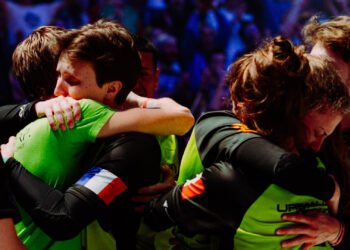


Four meetings.
Zero wins.
And yet, no rivalry in World Chase Tag® feels closer to flipping.
On paper, Hollywood Freerunners still own the matchup. In reality, the distance between them and UGEN has never felt smaller or more fragile. Not because of skill. Not because of athleticism. But because, increasingly, the difference lives somewhere harder to quantify: decision-making under pressure.
This isn’t a story about who’s better.
It’s about who blinks first.
I. The Matchup That Refuses to Resolve
UGEN and Hollywood Freerunners have crossed paths four times at the highest level. Each time, the result has landed in the same place: Hollywood advancing, UGEN walking away with the feeling that something slipped rather than broke.
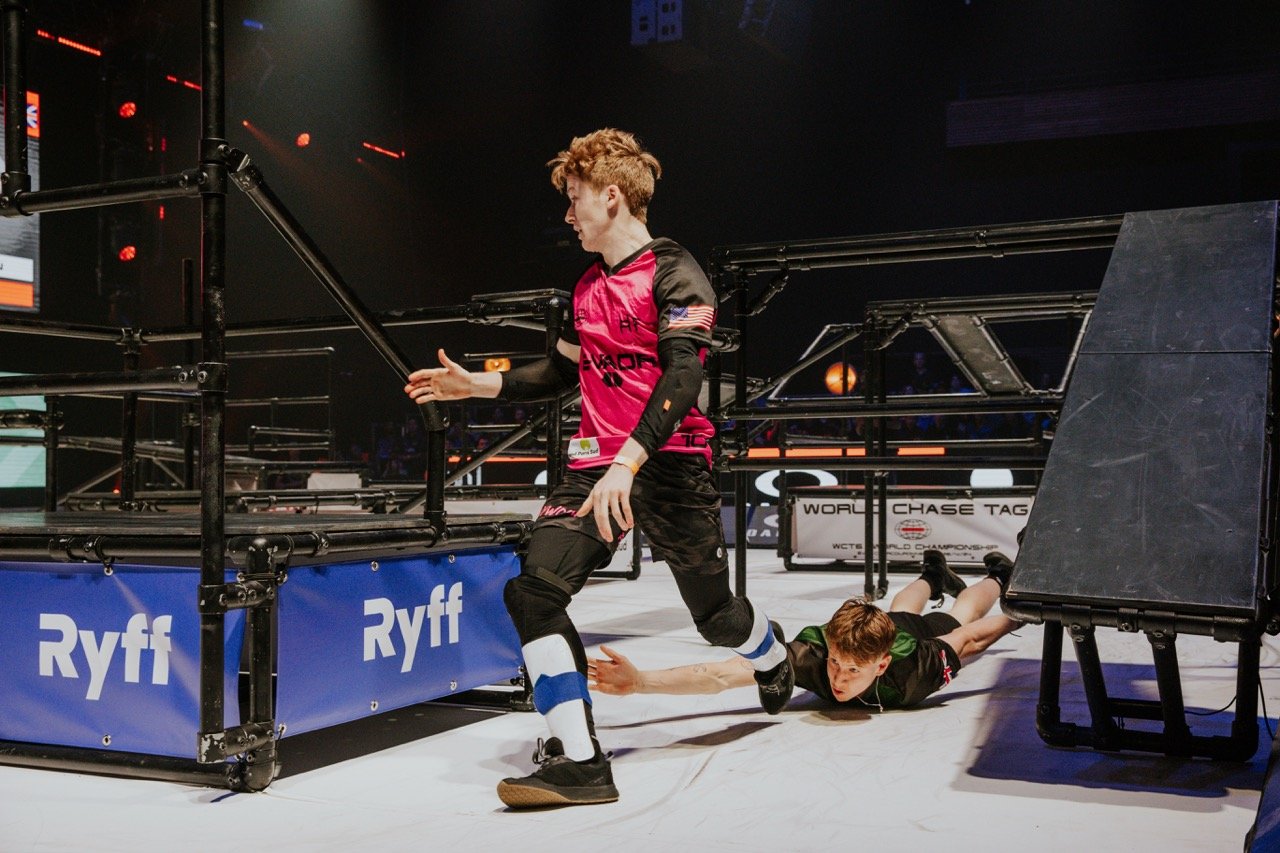
- WCT5 Worlds (2022, Group C)A 2–2 draw that still haunts UGEN. Leading 2–1, they held two match-point opportunities. One evasion, one chase and converted neither. Their most lethal tagger at the time, Haroon Hanafi, 100% tag rate at the time, never entered the Quad™. Sudden Death followed. Confusion. Then a final chase where Dale Smith tagged Dave Hogenboom at the very last second.
- WCT6 Worlds (2024, Group C)
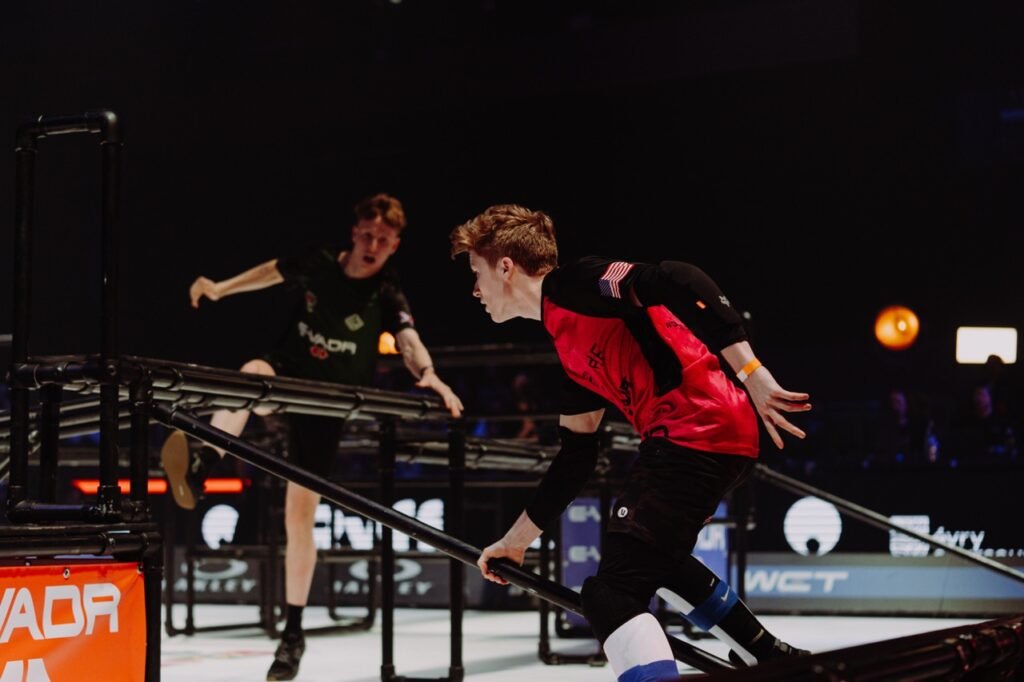
Cleaner. Colder. Hollywood won 2–0. No drama. No margin. - Brent Cross Chase-Off™ (September 2025)
A 0–0 draw. Sudden Death again. Carson Palmer, a brand-new Hollywood recruit, tagged Orlando Devaux in under five seconds. A former MVP caught instantly. - Rotterdam Chase-Off™ (November 2025)
Another draw. Another Sudden Death. Once again, the margins were microscopic but this time, they exposed something deeper than execution. In the opening Sudden-Death chase, Sam from UGEN was evading and, by most accounts, could realistically have held the full 20 seconds. Instead, he was tagged just shy of the limit. Had he committed at full intensity until the very end, UGEN would have secured the evasion. Even with Haroon Hanafi being evaded in the following chase, that single moment would have earned UGEN another round of Sudden Death, another chance to turn the match. That moment matters because it reflects a long-standing trait within UGEN’s identity. They love the game, and they love to play it. Few teams bring as much personality into the Quad™. But that same spirit can bleed into moments where discipline matters most. Teasing a chaser, turning around mid-run, lingering in the wrong area for a laugh each of these choices costs time, vision, and positional advantage. At this level, those costs are decisive. The contrast with Hollywood was stark. In the same match, Haroon Hanafi failed to secure a tag within 20 seconds against Ky Baldwin, marking the first blemish on his once-perfect record. Meanwhile, Ky’s sister Amy Baldwin, earlier crowned MVP of the 2026 U.S. Championships Women’s Division with Anarchy, tagged Orlando Devaux twice in under five seconds. The message was unmistakable: in decisive moments, Hollywood (and the Baldwins in particular) strip the game of emotion. In Sudden Death, ruthlessness, not flair, is what survives.
Different years. Different players. Same ending.
Which raises the uncomfortable question: why?
II. Two Teams, Two Mentalities
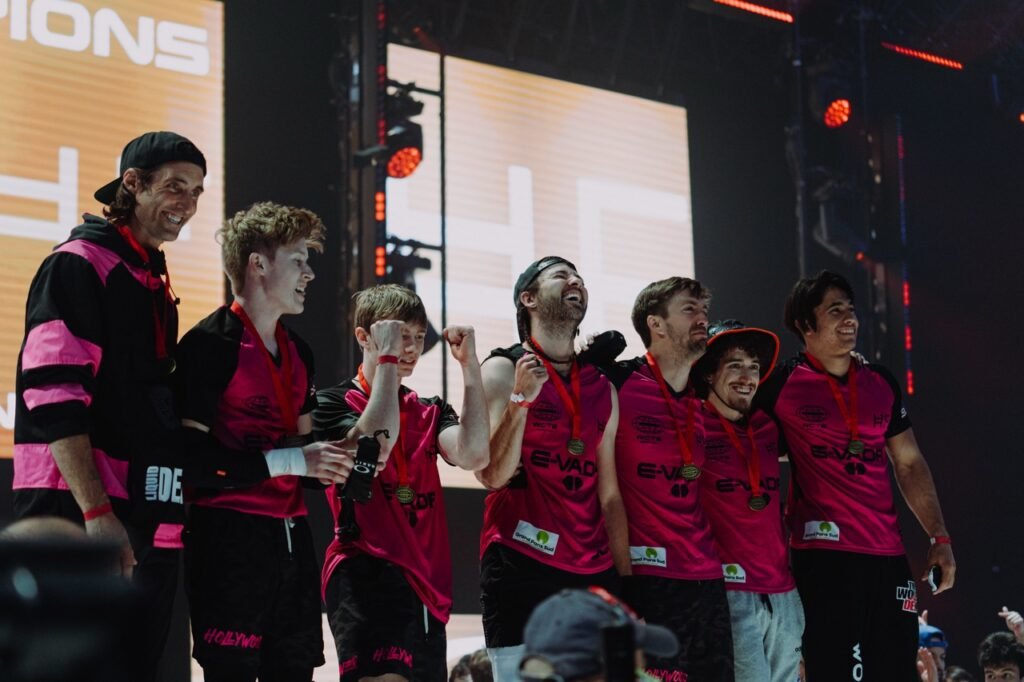
UGEN and Hollywood Freerunners are built differently. Not just tactically, but philosophically.
UGEN is structure-first.
They are fast, disciplined, repeatable. Their athletes excel at efficiency: speed vaults, clean lines, precise footwork at height. They rarely gamble. They aim to control.
Hollywood is preparation-first.
They study opponents. They plan chases. They design matchups. They are willing to absorb chaos if it leads to advantage.
The contrast matters most in high-pressure moments. Because when the Quad™ shrinks, when it’s Sudden Death, when every decision is final, instinct and clarity outweigh raw execution.
And Hollywood has lived there longer.
III. Where Matches Are Actually Won
At the elite level, Chase Tag® is rarely decided by the moments that look best on camera. Highlights are memorable, but matches are won long before them. Through pairings, timing, and a team’s collective relationship with risk. The most successful teams understand that who you send into the Quad™, when you send them, and what kind of chase you’re willing to accept matters more than any single spectacular move.
UGEN is a strong example of a team built around reliability, but also one shaped by circumstance. Their athletes are fast, powerful, and extremely efficient movers, excelling at clean lines, speed vaulting the mountain, and sustaining high pace at height. In recent years, however, that identity has at times been constrained by a recurring challenge: keeping a fully healthy roster. Compared to Hollywood Freerunners, UGEN have more often had to manage injuries, limit athlete availability, or adjust lineups on the fly, which naturally pushes a team toward safer, more repeatable solutions.
The trade-off is stylistic overlap. Many UGEN players solve problems in similar ways, prioritising efficiency and control over disruption. You rarely see ultra-committed, rhythm-breaking moves: dives between bars, bullets, ridge breakers, or other all-or-nothing actions. Not because they lack the ability, but because those options carry higher physical and strategic risk in an already fragile roster context. The result is a style that produces consistency and minimises errors, but also one that becomes easier to read over time. At the highest level, predictability is a form of information and information almost always favours the chaser.
Hollywood Freerunners approach the problem differently. Rather than seeking uniform excellence, they stack contrasting profiles within the same roster. Veterans who know how to slow the game down and drain the clock coexist with explosive chasers who aim to end a round in seconds. Alongside them are players comfortable operating at the edge of control, willing to accept higher physical and positional risk if it destabilises the opponent. This layering of styles forces the opposing team to constantly recalibrate.
The lesson is clear: balance beats brilliance. A roster doesn’t need six highlight machines. It needs contrast. When opponents can’t predict whether the next chase will be methodical or chaotic, conservative or aggressive, they hesitate and opportunities arise.
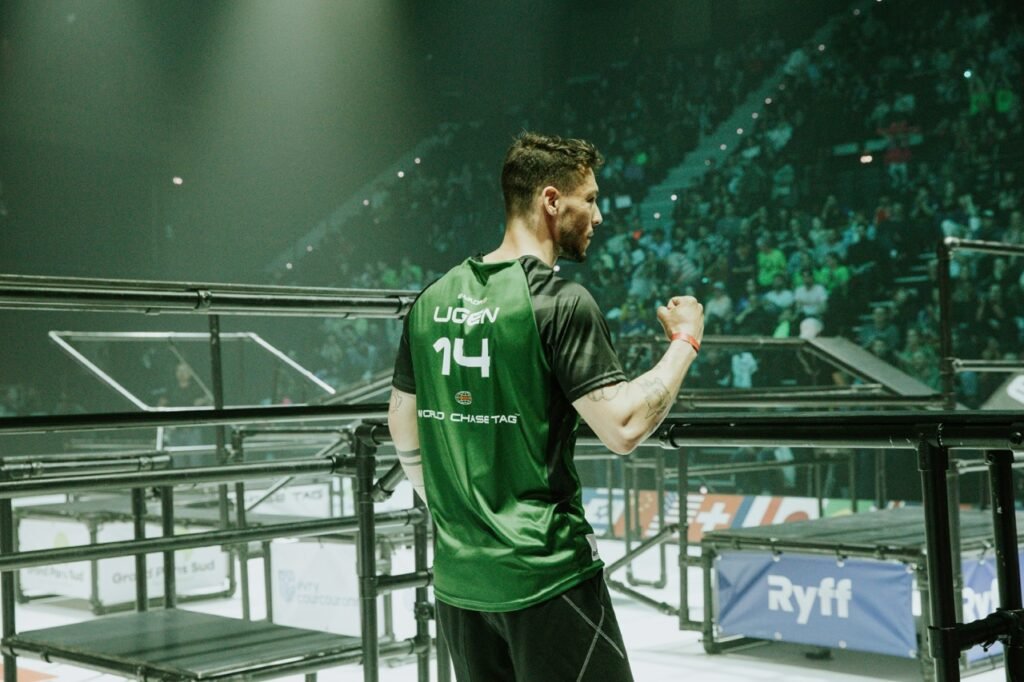
IV. The Sudden Death Problem
UGEN hasn’t lost to Hollywood because they’re slower.
They’ve lost because they hesitate at the wrong moment.
Look at the pattern:
- Match points not taken
- Star players held back
- Disputed calls instead of decisive outcomes
- Sudden Death chases that drift instead of conclude
Meanwhile, Hollywood expects Sudden Death to be theirs.
They manage load better. They rotate smarter. Their athletes arrive at decisive moments physically fresher and mentally clearer. Even when key figures like Kyle Soderman or Amos Rendao were absent in 2025, the system held, because the belief held.
That’s the psychological gap.
V. Hollywood’s Advantage Isn’t Talent, It’s Clarity
Hollywood’s recent dominance isn’t accidental.
Since WCT6, they’ve built around three pillars. Kyle Soderman, Amos Rendao & Ky Baldwin.
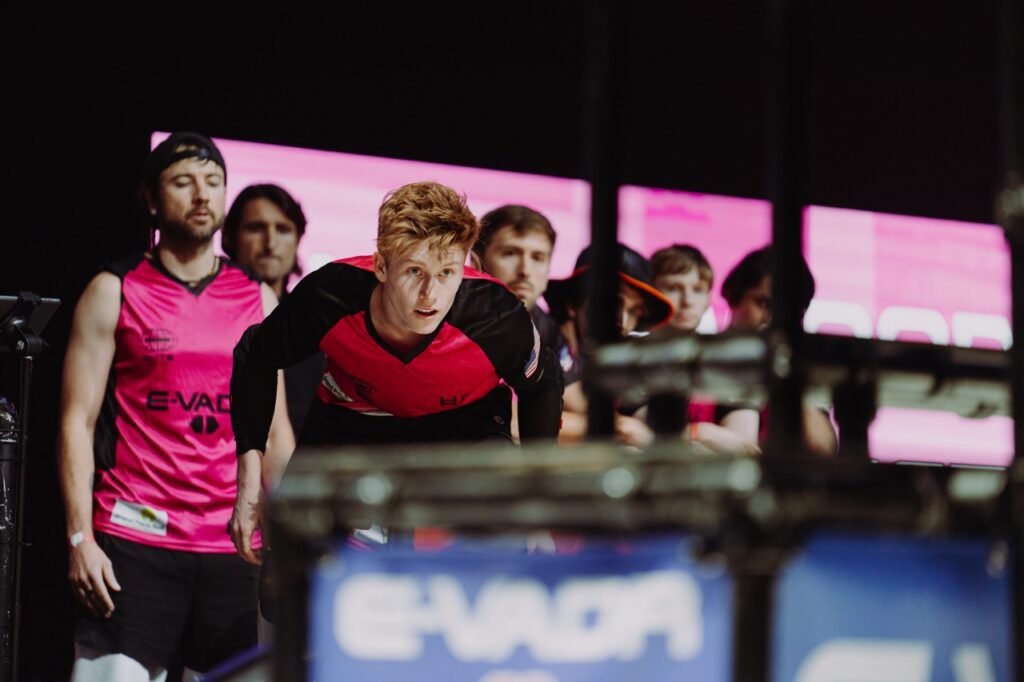
- Kyle Soderman: team captain, three-time National MVP, continental MVP, and the most experienced professional chaser the sport has ever seen.
- Amos Rendao: former World Champion (with APEX Moon), strategist, and preparation obsessive.
- Ky Baldwin: a rising star with charisma, confidence, and near-MVP-level impact.
Add to that a willingness to test new talent (Carson Palmer, Amy Baldwin, Grant Kiningham) and a culture of preparation, and you get a team that arrives knowing who does what, when, and why.
UGEN, by comparison, sometimes feels like it’s still searching for that final layer of certainty.
VI. The Mirror Nobody Likes to Look At
Here’s the uncomfortable truth: UGEN today looks a lot like Hollywood Freerunners before WCT6.
Always second.
Always close.
Always one decision away.
For years, Hollywood lived in that same space. Competitive enough to reach finals, dangerous enough to scare everyone, but unable to consistently close when the pressure peaked. The difference between that version of Hollywood and the team that emerged at WCT6 wasn’t a sudden jump in athleticism or a revolutionary new movement style. It was structural and psychological. They fixed what happened between chases: how decisions were made, who owned them, and how little room there was for hesitation once the call was set.
Hollywood committed to clarity. Roles became non-negotiable. Pairings were decided with intent, not emotion. Chases weren’t treated as isolated moments but as pieces of a broader plan. Most importantly, once a decision was made, it was trusted fully. No second-guessing, no improvising under stress. They stopped hoping that things would line up and started choosing when to force outcomes.
UGEN, on paper, has everything required to make the same leap. Their roster is deeper than it was two or three years ago. Their athletic ceiling is unquestionable. Their athletes have accumulated more high-level experience than almost anyone in the sport, and as the longest-standing active team in World Chase Tag®, they carry a history that few can match. None of this is missing.
What is missing, at least for now, is proof. Proof that when everything tightens, when the Quad™ feels smaller, when Sudden Death strips the game down to its rawest form, UGEN can consistently step over the line instead of up to it. Until that happens, the comparison will remain unavoidable. And like Hollywood once did, UGEN will keep staring at a mirror that shows not what they are but what they could become if they solve the final problem.
VII. If It Finally Breaks
If UGEN ever beats Hollywood Freerunners, truly beats them, on the World Championship stage, it won’t register as just another result. It will land as a rupture. A moment that forces the entire ecosystem to recalibrate what it thought it knew about power, hierarchy, and inevitability in World Chase Tag®.
Because a UGEN victory wouldn’t simply end a losing streak, it would shatter the idea that Hollywood are untouchable giants. The team that always survives the tight moments and always emerges when the margins vanish. It would send the World Championship trophy back to the UK, where the sport was born, and in doing so disrupt a narrative that has quietly solidified over recent years: one defined by U.S. and French dominance at the very top of the game.
WCT4 Worlds
🥇 United 🇫🇷
🥈 GNF 🇺🇸
WCT5 Worlds
🥇 APEX Eth 🇺🇸
🥈 Parkour59 🇫🇷
WCT6 Worlds
🥇 Hollywood Freerunners 🇺🇸
🥈 KIMEO 🇫🇷
WCT6 Worlds Women’s Division
🥇 Nano 🇫🇷
🥈 Kunoichi 🇺🇸
But that future doesn’t hinge on speed, strength, or technical ability. Those questions have already been answered. What stands in the way is something far less visible and far more demanding. Before UGEN can defeat Hollywood, they have to defeat the moment itself. The tightening chest, the shortened breath, the weight of every previous “almost.”
That question doesn’t belong to UGEN alone. Hollywood will be watching too, because dynasties don’t fall from outside pressure, they crack when doubt creeps in. And the next time these two teams meet, every chase will carry that tension: is this the moment the mirror breaks, or the moment it hardens?
For the reader, for the fan, for anyone who loves this sport, that’s the real invitation. Not just to watch another tournament, but to witness a story that has been building for years finally reach its turning point. At Worlds, we won’t just find out who wins.
We’ll find out who believes first.