


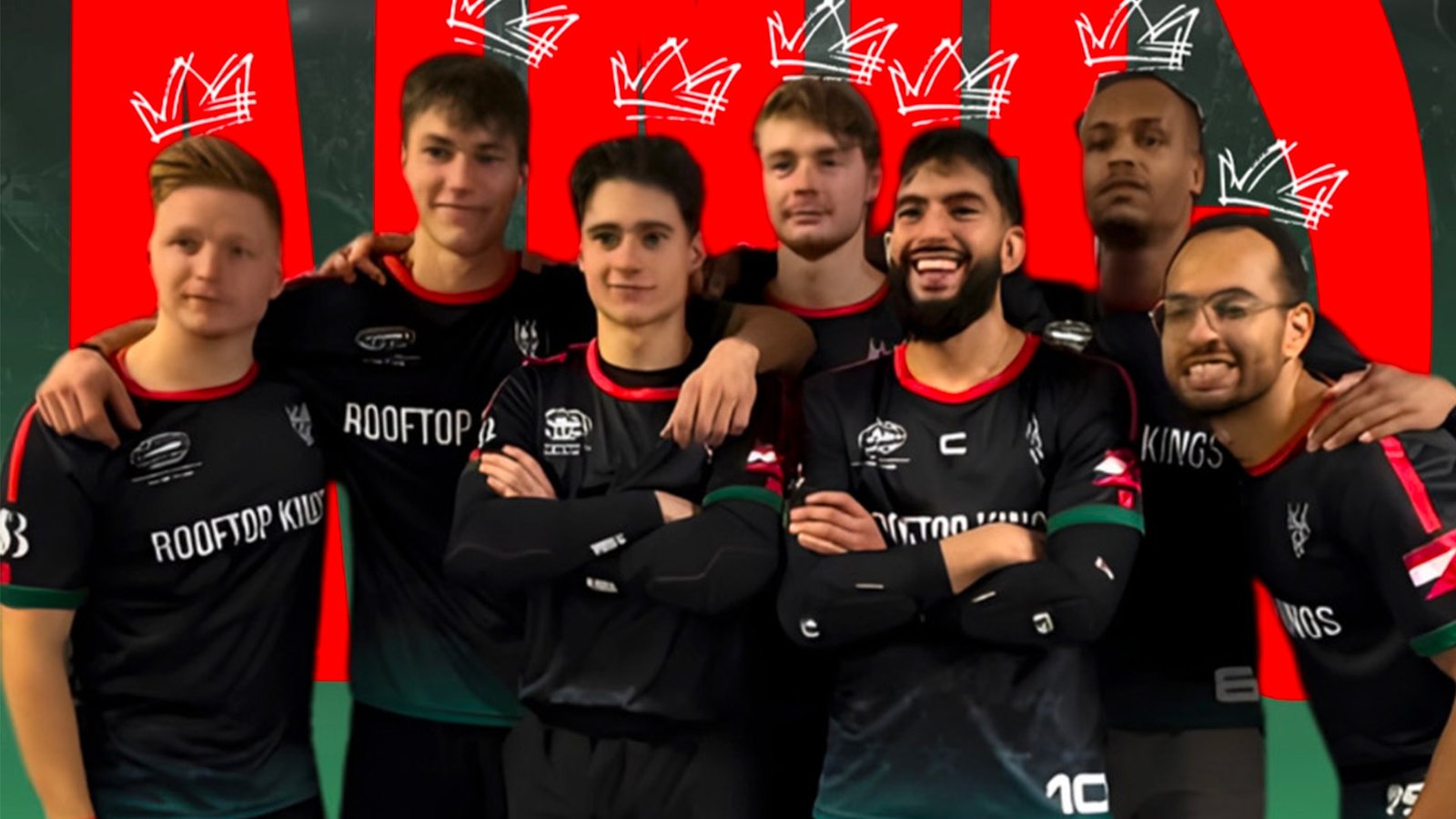
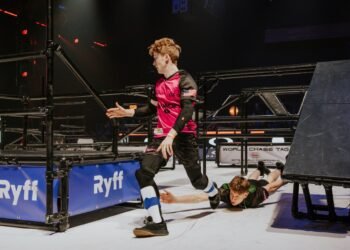
Rooftop Kings didn’t just win in Rotterdam. They passed every stress test the global elite could throw at them consecutively, publicly, and in front of a home crowd that raised the stakes rather than lowered them. Playing at home in the Rooftop Kings Arena, on their own Quad™, they invited the world’s best to a Chase-Off™ and defeated every one of them.
Hollywood Freerunners.
UGEN.
Parkour59.
Dexterity Depot.
Fakaw Paris.
Five matches. Five wins. This wasn’t a fluke.
I. Why Rotterdam Mattered
Chase-Offs™ are often dismissed. Not because of how they’re played, but because of how they’re treated. Detached from championship points and long-term standings, they are frequently approached as secondary events. Teams rotate lineups, protect athletes, experiment with pairings, and sometimes arrive without full rosters. As a result, top teams are often upset, and results are easy to dismiss as circumstantial rather than meaningful.
Rotterdam was different. Teams arrived with proper rosters, competed at full intensity, and treated every match as one they could not afford to lose. Rooftop Kings reinforced that mindset by introducing cash incentives, removing any remaining reason to coast through matches or manage effort. The usual safety valves of Chase-Off™ competition simply weren’t there.
In that context, volatility still existed but it applied to everyone equally. Winning once could still be noise. Winning five times, against five elite teams with radically different identities, was signal.
II. The Numbers: Offensive Supremacy in Plain Sight
The clearest story of the weekend is offensive output.
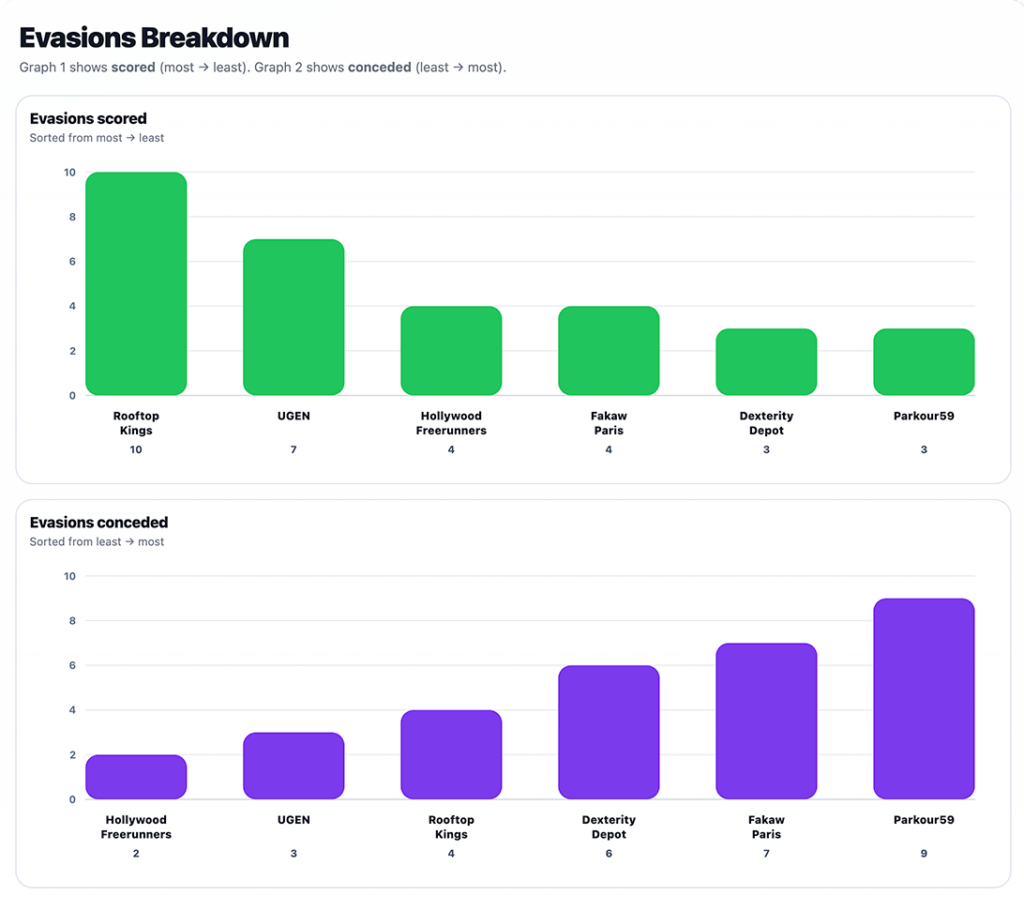
Rooftop Kings did not have the best defense. They had the best offense by a wide margin. More than double Hollywood’s total evasions, across the same number of matches.
That matters because Chase Tag® reward teams who can force points, not just avoid them. Rooftop Kings weren’t waiting for mistakes. They were manufacturing outcomes.
III. Home Quad™ Advantage
Rooftop Kings have trained on this Quad™ since early 2025, nearly a full year of repetition and calibration. While the Quad™ is identical to WCT specifications, the arena adds a meaningful constraint: three walls in close proximity, with wall contact considered out of bounds (Read more about the Out of Bounds rule here).
Importantly, this wasn’t an unfair advantage. Most visiting teams train on identical Quads at home. There were no formal complaints, no visible adaptation issues, and no officiating controversies. The difference wasn’t the equipment, it was familiarity under pressure.
The crowd was loud, supportive, and unmistakably partisan, but it didn’t rattle visiting teams. At this level, athletes are used to noise. What it did provide was energy and a reinforcement loop, especially for an aggressive team that feeds off initiative.
IV. Aggressive, Structured Offense
Rooftop Kings’ identity in Rotterdam was clear from the outset: aggressive, but not chaotic. Their offense was built to apply constant pressure, yet it was underpinned by structure rather than improvisation. Pairings were decided in advance and, crucially, respected throughout the event. That kind of rigidity can become a liability if execution drops. In Rotterdam, it became a multiplier.
Every athlete arrived at peak availability. No injuries. No forced substitutions. No emergency reshuffles. That stability mattered, especially when contrasted with the context surrounding their opponents. Hollywood Freerunners competed without key pillars after long transatlantic travel. Parkour59 approached the Chase-Off™ as a testing ground, rotating lineups rather than optimizing for results. UGEN struggled to impose consistent pairing logic while managing injuries. Fakaw Paris reached Sunday after five matches the day before, already carrying fatigue. Dexterity Depot traveled far and performed close to their ceiling, but had little room to elevate further.
Preparation alone doesn’t explain Rotterdam. Rooftop Kings arrived with a roster structurally aligned to the demands of the event. Short rotations, repeated high-pressure chases, and an emphasis on offensive output.
The results reflected that clarity. Against Fakaw Paris (2-0), Rooftop Kings struck early and never allowed the match to settle into rhythm. Against Dexterity Depot (2-1), the contest tightened until the final chase, where trust in offensive execution produced a decisive last evasion. Against Hollywood Freerunners (2-1), the psychological balance shifted early; Hollywood remained dangerous, but Rooftop Kings forced them into unfamiliar territory, chasing more than dictating. Against Parkour59 (1-0), patience replaced aggression. One evasion was enough, and overextension was deliberately avoided. Against UGEN (3-2), the highest-scoring and most emotional matchup of the weekend, Rooftop Kings stayed committed while the structure on the other side wavered.
None of these wins relied on opponent collapse or isolated brilliance. They were built on consistency. In pairings, in intent, and in execution across very different match contexts.
VI. The Defensive Trade-Off
Rooftop Kings conceded more evasions than their closest rivals. That’s a warning sign.
Risk-taking in offense increases exposure in defense. Rooftop Kings accepted that trade because they trusted their ability to outscore opponents. In Rotterdam, that trust was justified.
At World Championship level, however, margins tighten. Giving away evasions “too easily” will be punished. This is the area that determines whether Rotterdam was a peak or a step.
VII. A Roster Years in the Making
This performance didn’t appear overnight.
- Homegrown core: Bent Van’t Hof and Coen Ten Heggeler, developed internally.
- Regional recruits: Daan Van Dissel and Jesse Redegeld, training at Chase Academy in Amsterdam under Dave (UGEN), bringing deep insight into elite structures.
- Transfer: Taha Amine El Waqoudi, stepping into a similar role from Is Back Family.
- Anchors: Liziano ‘Lago’ Ostiana, explosive, confident, dangerous at height and Redouan Yagoub, not just as an athlete, but as architect and leader.
VIII. What Rotterdam Actually Changed
Rooftop Kings are not dominant. Yet.
But they are no longer outsiders, hopefuls, or spoilers. They are contenders and worse, disruptors. A team you hope lands in another bracket. A team that punishes under-preparation.
The teams most affected by this result are UGEN and Parkour59. Not because they lost, but because Rooftop Kings exposed structural gaps they can no longer ignore. That exposure is compounded by geography. As the closest top-tier teams to Rooftop Kings, they are also the ones most likely to cross paths again in training environments, joint sessions, and regional competitions. Each encounter offers Rooftop Kings further opportunities to test, refine, and pressure those same weaknesses, turning proximity from an advantage into a long-term risk.
IX. Peak or Beginning?
Rotterdam will attract skepticism. Missing athletes. Travel fatigue. Home advantage.
All of that is true. And none of it explains five wins.
More importantly, Rotterdam didn’t remain an isolated data point. Just one week later, Rooftop Kings confirmed their level at the Málaga Chase-Off™, once again winning the event. This time in conditions that removed any remaining comfort. Condensation, a slippery Quad™, and reduced margins punished hesitation and overcommitment alike. The field was different, but the test was no easier: established contenders like Dexterity Depot and Fakaw Paris, alongside emerging teams such as Nomad and Murcia Movement, all fell to the same outcome.
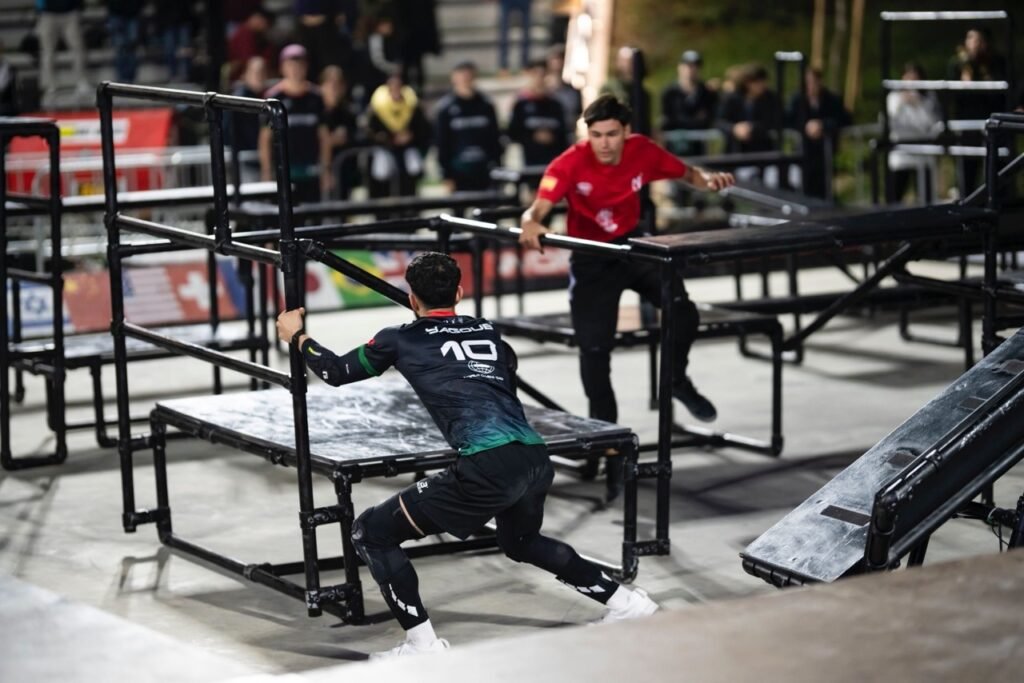
That second result reframes the question. The issue is no longer whether Rooftop Kings benefited from walls, crowd, or familiarity in Rotterdam. It’s whether their identity holds when conditions degrade and variables multiply.
The real question isn’t whether Rooftop Kings deserved Rotterdam. They did. The question is whether they can continue to reproduce this level across environments, formats, and constraints without home advantage doing part of the work.
That question doesn’t get answered in analysis.
It gets answered at Worlds. And when the group draw comes, the real debate will begin: who do you want to see lined up against Rooftop Kings in the group stage?








Comments 1